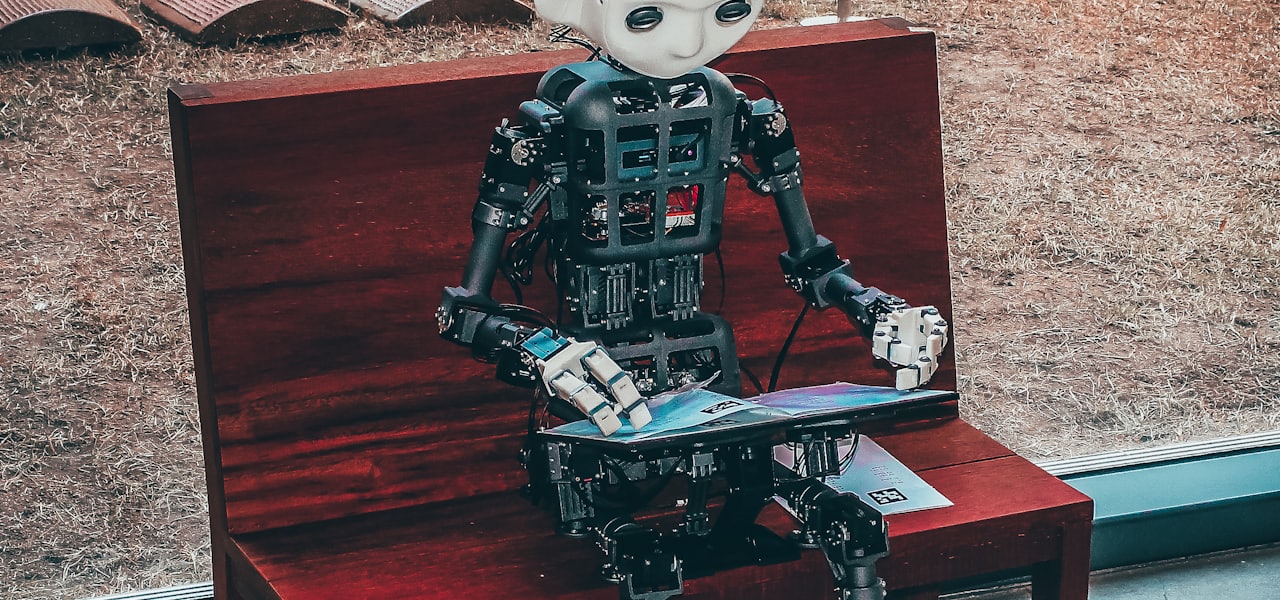
Mark A. Heimann is an American chess grandmaster and machine learning researcher. == Chess career == Heimann began playing chess at the age of 5 after his father bought him and his twin brother Alexander a chess set. He then won several national grade-level championships as well as the Pennsylvania and Ohio state championships in middle school and high school. In October 2007, he was ranked as the national #2 under-14 player, only behind future grandmaster Marc Tyler Arnold. In the February 2008 national rankings, he moved up to being the top-ranked under-14 player. In December 2012, he played for Washington University St. Louis' "A" team in the Pan-American Intercollegiate Chess Championships, where he was the second-most successful player, recording 4 wins, 1 draw, and 1 loss. The university's team also won the Division II championship title. In three tournaments between September and December 2022, Heimann earned three international master title norms, earning the international master title at the age of 29. In November 2024, he scored a GM norm at the U.S. Masters Chess Championship. He finished the event in joint-6th place. The following week, at the Saint Louis Masters tournament, he earned his final grandmaster norm and crossed 2500 in live rating, achieving the Grandmaster title. It was formally awarded to him in April 2025. == Research career == He obtained a bachelor's degree from Washington University in St. Louis in the School of Arts and Sciences and got his PhD from the University of Michigan. He is a machine learning researcher at Lawrence Livermore National Laboratory. == Personal life == Outside of chess and research, he also plays several instruments and is a competitive powerlifter.
Cross-entropy method
The cross-entropy (CE) method is a Monte Carlo method for importance sampling and optimization. It is applicable to both combinatorial and continuous problems, with either a static or noisy objective. The method approximates the optimal importance sampling estimator by repeating two phases: Draw a sample from a probability distribution. Minimize the cross-entropy between this distribution and a target distribution to produce a better sample in the next iteration. Reuven Rubinstein developed the method in the context of rare-event simulation, where tiny probabilities must be estimated, for example in network reliability analysis, queueing models, or performance analysis of telecommunication systems. The method has also been applied to the traveling salesman, quadratic assignment, DNA sequence alignment, max-cut and buffer allocation problems. == Estimation via importance sampling == Consider the general problem of estimating the quantity ℓ = E u [ H ( X ) ] = ∫ H ( x ) f ( x ; u ) d x {\displaystyle \ell =\mathbb {E} _{\mathbf {u} }[H(\mathbf {X} )]=\int H(\mathbf {x} )\,f(\mathbf {x} ;\mathbf {u} )\,{\textrm {d}}\mathbf {x} } , where H {\displaystyle H} is some performance function and f ( x ; u ) {\displaystyle f(\mathbf {x} ;\mathbf {u} )} is a member of some parametric family of distributions. Using importance sampling this quantity can be estimated as ℓ ^ = 1 N ∑ i = 1 N H ( X i ) f ( X i ; u ) g ( X i ) {\displaystyle {\hat {\ell }}={\frac {1}{N}}\sum _{i=1}^{N}H(\mathbf {X} _{i}){\frac {f(\mathbf {X} _{i};\mathbf {u} )}{g(\mathbf {X} _{i})}}} , where X 1 , … , X N {\displaystyle \mathbf {X} _{1},\dots ,\mathbf {X} _{N}} is a random sample from g {\displaystyle g\,} . For positive H {\displaystyle H} , the theoretically optimal importance sampling density (PDF) is given by g ∗ ( x ) = H ( x ) f ( x ; u ) / ℓ {\displaystyle g^{}(\mathbf {x} )=H(\mathbf {x} )f(\mathbf {x} ;\mathbf {u} )/\ell } . This, however, depends on the unknown ℓ {\displaystyle \ell } . The CE method aims to approximate the optimal PDF by adaptively selecting members of the parametric family that are closest (in the Kullback–Leibler sense) to the optimal PDF g ∗ {\displaystyle g^{}} . == Generic CE algorithm == Choose initial parameter vector v ( 0 ) {\displaystyle \mathbf {v} ^{(0)}} ; set t = 1. Generate a random sample X 1 , … , X N {\displaystyle \mathbf {X} _{1},\dots ,\mathbf {X} _{N}} from f ( ⋅ ; v ( t − 1 ) ) {\displaystyle f(\cdot ;\mathbf {v} ^{(t-1)})} Solve for v ( t ) {\displaystyle \mathbf {v} ^{(t)}} , where v ( t ) = argmax v 1 N ∑ i = 1 N H ( X i ) f ( X i ; u ) f ( X i ; v ( t − 1 ) ) log f ( X i ; v ) {\displaystyle \mathbf {v} ^{(t)}=\mathop {\textrm {argmax}} _{\mathbf {v} }{\frac {1}{N}}\sum _{i=1}^{N}H(\mathbf {X} _{i}){\frac {f(\mathbf {X} _{i};\mathbf {u} )}{f(\mathbf {X} _{i};\mathbf {v} ^{(t-1)})}}\log f(\mathbf {X} _{i};\mathbf {v} )} If convergence is reached then stop; otherwise, increase t by 1 and reiterate from step 2. In several cases, the solution to step 3 can be found analytically. Situations in which this occurs are When f {\displaystyle f\,} belongs to the natural exponential family When f {\displaystyle f\,} is discrete with finite support When H ( X ) = I { x ∈ A } {\displaystyle H(\mathbf {X} )=\mathrm {I} _{\{\mathbf {x} \in A\}}} and f ( X i ; u ) = f ( X i ; v ( t − 1 ) ) {\displaystyle f(\mathbf {X} _{i};\mathbf {u} )=f(\mathbf {X} _{i};\mathbf {v} ^{(t-1)})} , then v ( t ) {\displaystyle \mathbf {v} ^{(t)}} corresponds to the maximum likelihood estimator based on those X k ∈ A {\displaystyle \mathbf {X} _{k}\in A} . == Continuous optimization—example == The same CE algorithm can be used for optimization, rather than estimation. Suppose the problem is to maximize some function S {\displaystyle S} , for example, S ( x ) = e − ( x − 2 ) 2 + 0.8 e − ( x + 2 ) 2 {\displaystyle S(x)={\textrm {e}}^{-(x-2)^{2}}+0.8\,{\textrm {e}}^{-(x+2)^{2}}} . To apply CE, one considers first the associated stochastic problem of estimating P θ ( S ( X ) ≥ γ ) {\displaystyle \mathbb {P} _{\boldsymbol {\theta }}(S(X)\geq \gamma )} for a given level γ {\displaystyle \gamma \,} , and parametric family { f ( ⋅ ; θ ) } {\displaystyle \left\{f(\cdot ;{\boldsymbol {\theta }})\right\}} , for example the 1-dimensional Gaussian distribution, parameterized by its mean μ t {\displaystyle \mu _{t}\,} and variance σ t 2 {\displaystyle \sigma _{t}^{2}} (so θ = ( μ , σ 2 ) {\displaystyle {\boldsymbol {\theta }}=(\mu ,\sigma ^{2})} here). Hence, for a given γ {\displaystyle \gamma \,} , the goal is to find θ {\displaystyle {\boldsymbol {\theta }}} so that D K L ( I { S ( x ) ≥ γ } ‖ f θ ) {\displaystyle D_{\mathrm {KL} }({\textrm {I}}_{\{S(x)\geq \gamma \}}\|f_{\boldsymbol {\theta }})} is minimized. This is done by solving the sample version (stochastic counterpart) of the KL divergence minimization problem, as in step 3 above. It turns out that parameters that minimize the stochastic counterpart for this choice of target distribution and parametric family are the sample mean and sample variance corresponding to the elite samples, which are those samples that have objective function value ≥ γ {\displaystyle \geq \gamma } . The worst of the elite samples is then used as the level parameter for the next iteration. This yields the following randomized algorithm that happens to coincide with the so-called Estimation of Multivariate Normal Algorithm (EMNA), an estimation of distribution algorithm. === Pseudocode === // Initialize parameters μ := −6 σ2 := 100 t := 0 maxits := 100 N := 100 Ne := 10 // While maxits not exceeded and not converged while t < maxits and σ2 > ε do // Obtain N samples from current sampling distribution X := SampleGaussian(μ, σ2, N) // Evaluate objective function at sampled points S := exp(−(X − 2) ^ 2) + 0.8 exp(−(X + 2) ^ 2) // Sort X by objective function values in descending order X := sort(X, S) // Update parameters of sampling distribution via elite samples μ := mean(X(1:Ne)) σ2 := var(X(1:Ne)) t := t + 1 // Return mean of final sampling distribution as solution return μ == Related methods == Simulated annealing Genetic algorithms Harmony search Estimation of distribution algorithm Tabu search Natural Evolution Strategy Ant colony optimization algorithms
Elastic cloud storage
An elastic cloud is a cloud computing offering that provides variable service levels based on changing needs. Elasticity is an attribute that can be applied to most cloud services. It states that the capacity and performance of any given cloud service can expand or contract according to a customer's requirements and that this can potentially be changed automatically as a consequence of some software-driven event or, at worst, can be reconfigured quickly by the customer's infrastructure management team. Elasticity has been described as one of the five main principles of cloud computing by Rosenburg and Mateos in The Cloud at Your Service - Manning 2011. == History == Cloud computing was first described by Gillet and Kapor in 1996; however, the first practical implementation was a consequence of a strategy to leverage Amazon's excess data center capacity. Amazon and other pioneers of the commercial use of this technology were primarily interested in providing a “public” cloud service, whereby they could offer customers the benefits of using the cloud, particularly the utility-based pricing model benefit. Other suppliers followed suit with a range of cloud-based models all offering elasticity as a core component, but these suppliers were only offering this service as an element of their public cloud service. Due to perceived weaknesses in security, or at least a lack of proven compliance, many organizations, particularly in the financial and public sectors, have been slow adopters of cloud technologies. These wary organizations can achieve some of the benefits of cloud computing by adopting private cloud technologies. An alternative form of the elastic cloud has been offered by vendors such as EMC and IBM, whereby the service is based around an enterprise's own infrastructure but still retains elements of elasticity and the potential to bill by consumption. == Description == Elasticity in cloud computing is the ability for the organization to adjust its storage requirements in terms of capacity and processing with respect to operational requirements. This has the following benefits: Operational Benefits - Services can be acquired quickly, meaning that the evolving requirements of the business can be addressed almost immediately, giving an organization a potential agility advantage. A properly implemented elastic system will provision/de-provision according to application demands, so if a particular business has activity spikes then the provision can be enabled to match the demand and the capacity can be re-allocated. Research and Development (R&D) Projects - R&D activities are no longer hindered by a requirement to secure a capex budget prior to a project starting. Capability can simply be provisioned from the cloud and released at the end of the exercise. Testing and Deployment - With most large-scale projects a size test needs to be performed prior to final rollout. By taking advantage of the elasticity of the cloud and creating a full-scale avatar of the proposed production system, realistic data and traffic volumes can be provisioned and released as needed. Expensive Resources Allocated - This will normally apply only in the context where a customer is applying at least some of their own servers as part of a cloud infrastructure, specifically where a business (for performance reasons) has decided to invest in solid-state storage as opposed to spinning platters. There are instances when, due to activity spikes, a less critical process may need to be moved from the high-performance resources to more traditional storage. Server Specification - When a customer has elected to own/lease hardware, they can select and specify servers that are specifically tuned to meet the likely needs of their operation (i.e., directly controlling the cost/benefit equation). Utility Based Payments - There is, of course, a key cost driver in this process, and the notion that you should pay for what you consume is acceptable for many organizations. When hardware capacity is sourced internally, organizations need to over-provision. This applies just as much to traditional outsourcing as it does to capex-related expenditure on in-house servers. Cloud Platform – At the heart of any cloud storage system is the ability to manage hyperscale object storage and a Hadoop Distributed Files System (HDFS). Elastic storage capability is particularly well suited to hyperscale and Hadoop environments, where its capability to rapidly respond to changing circumstances and priorities is essential
Teamwork (project management)
Teamwork.com is an Irish, privately owned, web-based software company headquartered in Cork, Ireland. Teamwork creates task management and team collaboration software. Founded in 2007, as of 2016 the company stated that its software was in use by over 370,000 organisations worldwide (including Disney, Spotify and HP), and that it had over 2.4m users. == History == Peter Coppinger and Dan Mackey founded a company, Digital Crew, in 2007. This company built websites, intranets and custom web-based solutions for clients in Cork, Ireland. Frustrated by whiteboards and software management tools, Coppinger wanted a software system that would help manage client projects and which would be easy to use and generic enough to be used by different types of companies. Originally 37signals Basecamp users themselves, Coppinger and Mackey were frustrated by the limited feature set, and by Basecamp's apparent inaction on their feedback. In October 2007, Coppinger and Mackey launched Teamwork Project Manager, nicknamed TeamworkPM. In March 2015, this was renamed as Teamwork Projects. In 2014, after two years of negotiations, TeamworkPM bought the domain name 'Teamwork.com' for US$675,000 (€500,000). At the time this was one of the most expensive domain name purchases by an Irish company, and involved the transfer of a domain name which had been dormant since it was first acquired by the original owner in 1999. In 2015, Teamwork.com was named by Gartner to be one of their "Cool Vendors" in the Program and Portfolio Management Category. This was followed by the launch of a new real-time messaging product, Teamwork Chat, in January 2015. In June 2015, the company announced a drive to recruit for 40 positions by the end of the year. This was followed by the announcement that the company was investing more than €1 million in a new office, and had leased office space in Park House, Blackpool. In June 2016, Teamwork.com undertook a further recruitment drive to entice developers to Cork. In July 2021, the company announced that it had raised an investment of $70 million (€59.1 million) from venture capital firm Bregal Milestone to fund further growth. == Products == Teamwork markets a number of cloud-based applications, including Teamwork, Teamwork Desk, Teamwork Spaces, Teamwork CRM and Teamwork Chat. Teamwork was launched on 4 October 2007, at which time it had time management, milestone management, file sharing, time tracking, and messaging features. Teamwork's platform reportedly integrates with martech software like HubSpot, as well as other productivity tools like Slack, G Suite, MS Teams, Zapier, Dropbox and QuickBooks. == Awards == In 2016, Teamwork was awarded Cork's Best SME in the Cork Chamber of Commerce "Company of the Year" awards. In 2016, Teamwork was named number 7 in Deloitte's Fast 50 tech companies hit €1.6bn turnover. In 2015, Teamwork was identified as a Gartner "Cool Vendor" in the Program and Portfolio Management Category.
NumPy
NumPy (pronounced NUM-py) is a library for the Python programming language, adding support for large, multi-dimensional arrays and matrices, along with a large collection of high-level mathematical functions to operate on these arrays. The predecessor of NumPy, Numeric, was originally created by Jim Hugunin with contributions from several other developers. In 2005, Travis Oliphant created NumPy by incorporating features of the competing Numarray into Numeric, with extensive modifications. NumPy is open-source software and has many contributors. NumPy is fiscally sponsored by NumFOCUS. == History == === matrix-sig === The Python programming language was not originally designed for numerical computing, but attracted the attention of the scientific and engineering community early on. In 1995 the special interest group (SIG) matrix-sig was founded with the aim of defining an array computing package; among its members was Python designer and maintainer Guido van Rossum, who extended Python's syntax (in particular the indexing syntax) to make array computing easier. === Numeric === An implementation of a matrix package was completed by Jim Fulton, then expanded to support multi-dimensional arrays by Jim Hugunin and called Numeric (also variously known as the "Numerical Python extensions" or "NumPy"), with influences from the APL family of languages, Basis, MATLAB, FORTRAN, S and S+, and others. Hugunin, a graduate student at the Massachusetts Institute of Technology (MIT), joined the Corporation for National Research Initiatives (CNRI) in 1997 to work on JPython, leaving Paul Dubois of Lawrence Livermore National Laboratory (LLNL) to take over as maintainer. Other early contributors include David Ascher, Konrad Hinsen and Travis Oliphant. === Numarray === A new package called Numarray was written as a more flexible replacement for Numeric. Like Numeric, it too is now deprecated. Numarray had faster operations for large arrays, but was slower than Numeric on small ones, so for a time both packages were used in parallel for different use cases. The last version of Numeric (v24.2) was released on 11 November 2005, while the last version of numarray (v1.5.2) was released on 24 August 2006. There was a desire to get Numeric into the Python standard library, but Guido van Rossum decided that the code was not maintainable in its state then. === NumPy === In early 2005, NumPy developer Travis Oliphant wanted to unify the community around a single array package and ported Numarray's features to Numeric, releasing the result as NumPy 1.0 in 2006. This new project was part of SciPy. To avoid installing the large SciPy package just to get an array object, this new package was separated and called NumPy. Support for Python 3 was added in 2011 with NumPy version 1.5.0. In 2011, PyPy started development on an implementation of the NumPy API for PyPy. As of 2023, it is not yet fully compatible with NumPy. == Features == NumPy targets the CPython reference implementation of Python, which is a non-optimizing bytecode interpreter. Mathematical algorithms written for this version of Python often run much slower than compiled equivalents due to the absence of compiler optimization. NumPy addresses the slowness problem partly by providing multidimensional arrays and functions and operators that operate efficiently on arrays; using these requires rewriting some code, mostly inner loops, using NumPy. Using NumPy in Python gives functionality comparable to MATLAB since they are both interpreted, and they both allow the user to write fast programs as long as most operations work on arrays or matrices instead of scalars. In comparison, MATLAB boasts a large number of additional toolboxes, notably Simulink, whereas NumPy is intrinsically integrated with Python, a more modern and complete programming language. Moreover, complementary Python packages are available; SciPy is a library that adds more MATLAB-like functionality and Matplotlib is a plotting package that provides MATLAB-like plotting functionality. Although MATLAB can perform sparse matrix operations, NumPy alone cannot perform such operations and requires the use of the scipy.sparse library. Internally, both MATLAB and NumPy rely on BLAS and LAPACK for efficient linear algebra computations. Python bindings of the widely used computer vision library OpenCV utilize NumPy arrays to store and operate on data. Since images with multiple channels are simply represented as three-dimensional arrays, indexing, slicing or masking with other arrays are very efficient ways to access specific pixels of an image. The NumPy array as universal data structure in OpenCV for images, extracted feature points, filter kernels and many more vastly simplifies the programming workflow and debugging. Importantly, many NumPy operations release the global interpreter lock, which allows for multithreaded processing. NumPy also provides a C API, which allows Python code to interoperate with external libraries written in low-level languages. === The ndarray data structure === The core functionality of NumPy is its "ndarray", for n-dimensional array, data structure. These arrays are strided views on memory. In contrast to Python's built-in list data structure, these arrays are homogeneously typed: all elements of a single array must be of the same type. Such arrays can also be views into memory buffers allocated by C/C++, Python, and Fortran extensions to the CPython interpreter without the need to copy data around, giving a degree of compatibility with existing numerical libraries. This functionality is exploited by the SciPy package, which wraps a number of such libraries (notably BLAS and LAPACK). NumPy has built-in support for memory-mapped ndarrays. === Limitations === Inserting or appending entries to an array is not as trivially possible as it is with Python's lists. The np.pad(...) routine to extend arrays actually creates new arrays of the desired shape and padding values, copies the given array into the new one and returns it. NumPy's np.concatenate([a1,a2]) operation does not actually link the two arrays but returns a new one, filled with the entries from both given arrays in sequence. Reshaping the dimensionality of an array with np.reshape(...) is only possible as long as the number of elements in the array does not change. These circumstances originate from the fact that NumPy's arrays must be views on contiguous memory buffers. Algorithms that are not expressible as a vectorized operation will typically run slowly because they must be implemented in "pure Python", while vectorization may increase memory complexity of some operations from constant to linear, because temporary arrays must be created that are as large as the inputs. Runtime compilation of numerical code has been implemented by several groups to avoid these problems; open source solutions that interoperate with NumPy include numexpr and Numba. Cython and Pythran are static-compiling alternatives to these. Many modern large-scale scientific computing applications have requirements that exceed the capabilities of the NumPy arrays. For example, NumPy arrays are usually loaded into a computer's memory, which might have insufficient capacity for the analysis of large datasets. Further, NumPy operations are executed on a single CPU. However, many linear algebra operations can be accelerated by executing them on clusters of CPUs or of specialized hardware, such as GPUs and TPUs, which many deep learning applications rely on. As a result, several alternative array implementations have arisen in the scientific python ecosystem over the recent years, such as Dask for distributed arrays and TensorFlow or JAX for computations on GPUs. Because of its popularity, these often implement a subset of NumPy's API or mimic it, so that users can change their array implementation with minimal changes to their code required. A library named CuPy, accelerated by Nvidia's CUDA framework, has also shown potential for faster computing, being a 'drop-in replacement' of NumPy. == Examples == NumPy is conventionally imported as np. === Basic operations === === Universal functions === === Linear algebra === === Multidimensional arrays === === Incorporation with OpenCV === === Nearest-neighbor search === Functional Python and vectorized NumPy version. === F2PY === Quickly wrap native code for faster scripts.
Toolchain
A toolchain is a set of software development tools used to build and otherwise develop software. Often, the tools are executed sequentially and form a pipeline such that the output of one tool is the input for the next. Sometimes the term is used for a set of related tools that are not necessarily executed sequentially. A relatively common and simple toolchain consists of the tools to build for a particular operating system (OS) and CPU architecture: a compiler, a linker, and a debugger. With a cross-compiler, a toolchain can support cross-platform development. For building more complex software systems, many other tools may be in the toolchain. For example, for a video game, the toolchain may include tools for preparing sound effects, music, textures, 3-dimensional models and animations, and for combining these resources into the finished product.
Amazon Kinesis
Amazon Kinesis is a family of services provided by Amazon Web Services (AWS) for processing and analyzing real-time streaming data at a large scale. Launched in November 2013, it offers developers the ability to build applications that can consume and process data from multiple sources simultaneously. Kinesis supports multiple use cases, including real-time analytics, log and event data collection, and real-time processing of data generated by IoT devices. == History == Amazon Kinesis was launched by Amazon Web Services (AWS) in November 2013 as a managed service for processing and analyzing real-time streaming data at a large scale. The service was introduced to address the growing need for businesses to process and analyze data as it was generated, rather than in batches, allowing for real-time insights and decision-making. Since its launch, the Amazon Kinesis family of services has expanded to include four main components: Kinesis Data Streams, Kinesis Data Firehose, Kinesis Data Analytics, and Kinesis Video Streams. Each of these components serves a specific purpose in the processing and analysis of real-time streaming data. In August 2015, AWS announced the availability of Kinesis Data Firehose, a fully managed service for delivering real-time streaming data to destinations such as Amazon S3, Amazon Redshift, and Amazon Elasticsearch. A year later in August 2016, AWS launched Kinesis Data Analytics, enabling customers to analyze streaming data in real time using standard SQL queries. AWS introduced Kinesis Video Streams, a fully managed service for securely capturing, processing, and storing video streams for analytics and machine learning applications, was introduced by AWS in November 2017. == Components == Amazon Kinesis is composed of four main services: Kinesis Data Streams, Kinesis Data Firehose, Kinesis Data Analytics, and Kinesis Video Streams. === Kinesis Data Streams === Kinesis Data Streams is a scalable and durable real-time data streaming service that captures and processes gigabytes of data per second from multiple sources. It enables the storage and processing of data in real time, making it useful for applications that require immediate insights, such as monitoring and alerting. === Kinesis Data Firehose === Kinesis Data Firehose is a fully managed service for delivering real-time streaming data to destinations such as Amazon S3, Amazon Redshift, Amazon Elasticsearch, and AWS-partner data stores. With Data Firehose, users can configure and scale data delivery without manual intervention. === Kinesis Data Analytics === Kinesis Data Analytics enables the analysis of streaming data in real time using standard SQL or Apache Flink. === Kinesis Video Streams === Kinesis Video Streams is a fully managed service for securely capturing, processing, and storing video streams for analytics and machine learning. It supports multiple video codecs and streaming protocols, making it suitable for various use cases, such as security and surveillance, video-enabled IoT devices, and live event broadcasting. == Integration == Amazon Kinesis can be easily integrated with other AWS services, such as AWS Lambda, Amazon S3, Amazon Redshift, and Amazon OpenSearch. This integration enables developers to build end-to-end streaming data processing applications, taking advantage of the extensive AWS ecosystem. == Use cases == Some common use cases for Amazon Kinesis include: Real-time analytics: Analyzing streaming data in real time to provide immediate insights and make data-driven decisions. Log and event data collection: Collecting, processing, and analyzing log and event data generated by applications, infrastructure, and devices. IoT data processing: Processing and analyzing large volumes of data generated by IoT devices in real time. Machine learning: Ingesting and processing video streams for machine learning applications, such as object recognition, facial recognition, and sentiment analysis. == Pricing == Amazon Kinesis follows a pay-as-you-go pricing model, with costs depending on the chosen service, data volume, and processing power required. AWS provides a free tier for Kinesis Data Streams and Kinesis Data Firehose, allowing users to get started with the services at no cost.